The Red Palace
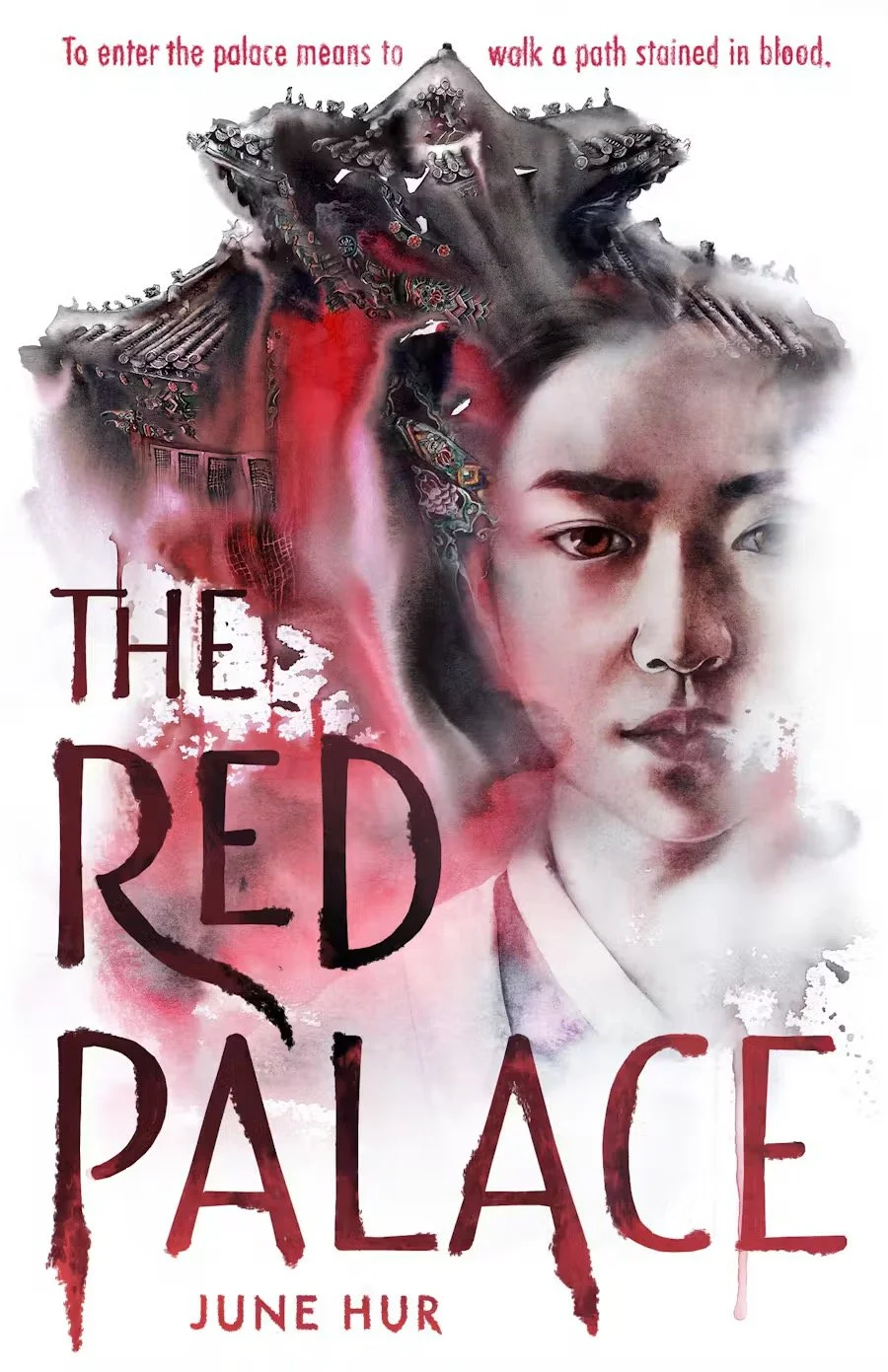
The Red Palace
Author: June Hur
Genre: Historical Fiction (YA)
Rating: L
Source: Personally purchased
Non Spoiler Synopsis:
The Red Palace takes place in 1758 during Korea’s Joseon period. The book’s protagonist is Hyeon, the concubine-born daughter of Lord Shin. Unacknowledged by her father, she has been forced to make her own way in the world by her wits. She is a palace nurse, specifically a pulse nurse.
The story begins when she is summoned to care for the Crown Prince—only the patient is not actually the Crown Prince. It’s a palace eunuch. And just like that, Hyeon has unwillingly been drawn into palace politics. The Crown Princess orders her to tell everyone, including the king, that the Crown Prince is ill. Hyeon understands that by agreeing to the deception, she may be risking a death sentence for lying to the king. As she leaves the Crown Prince’s residence that night, there is a disturbance in the palace. Four women have been murdered at the local nursing school and clinic. Hyeon goes to investigate and discovers that three of the victims were nurses or nursing trainees, while the fourth was a court lady.
At the scene, Hyeon is caught by a young man who later turns out to be Inspector Seo. The two eventually join forces to find the killer. Will they find the killer before the killer finds them? Most importantly, will they survive court politics?
My dearest readers,
When I ran the first iteration of The Bluestocking Guide, one thing I did not do was explain precisely why I included so many spoilers in my reviews. People complained about it. So I am going to explain it once, at the beginning, and then I am going to assume that you are capable of reading and comprehending what follows. I enjoy writing book reviews. Some of those reviews will be of books that have not yet been published, and in those cases I will not spoil the book. Published books, however, will be spoiled.
The Bluestocking Guide is not merely a review site. It is also my reading journal and personal research archive. I write detailed synopses because, when inspiration strikes, I write literary essays. Those essays frequently require me to return to books I read months or years earlier and reference particular characters, scenes, themes, historical details, or plot developments. I use my own reviews to refresh my memory so that I do not have to reread an entire book every time I want to write an essay, because ain’t nobody got time for that.
That is why the detailed synopsis exists. It is for me. It is not for you. You are, of course, welcome to read it. I am simply allowing you to share in my research archive. But I am not going to change the format because someone prefers spoiler-free reviews. That is precisely why I have given you a very nice, short, sweet, spoiler-free summary at the beginning of the post. If you continue beyond this point and get spoiled, you have been warned. If you would rather skip the detailed synopsis and go directly to my opinion, use Control-F on a PC or Command-F on a Mac and search for “Learned Opinion.” That will take you to Bluestocking’s Learned Opinion near the bottom of the page.
Aside from that, I don’t want to hear it.
You’ve been warned.
Sincerely,
Bluestocking
Spoiler Filled Synopsis
Hyeon is summoned to the Crown Prince’s quarters, but the patient she is asked to treat is not actually the Crown Prince. One of the palace eunuchs is masquerading as him. Hyeon and another palace nurse are instructed to treat the eunuch and, more importantly, to tell anyone who asks that the Crown Prince is unwell. It is immediately apparent that the Crown Princess is nervous. The Crown Prince is not supposed to leave the palace, and that is precisely what he has done. As the evening stretches into morning, the Crown Prince finally returns. Hyeon and the other nurse are allowed to leave, but as they make their way through the palace they hear people talking about a group of women who have been murdered. The location catches Hyeon’s attention because it is the medical office where she once studied and worked.
Of course, she goes to investigate.
She discovers that four women have been killed. Two are young student nurses, a nurse, and t a court lady named Ahnbi, who served as a lady’s maid to one of the king’s concubines.
Fun fact #1
Court ladies are considered among the king’s women; their lives are devoted to his service, and they are not ordinarily permitted to leave the palace.
The bodies have been covered, but Hyeon lifts the coverings and examines them. All four women have been violently murdered. The three nurses—and for simplicity I’m going to refer to the students as nurses as well—have defensive wounds. It is obvious they fought desperately for their lives. However, Ahnbi has no defensive wounds at all! While Hyeon is examining the scene, she is caught by a young man who appears to be the servant of one of the police officers. He begins questioning her about what she is doing there and observing what she has noticed. My reading of the scene was that he was simultaneously irritated by her and somewhat impressed with her.
At this point, the principal suspect is Nurse Jeongsu, Hyeon’s mentor. The novel then gives us enough of Hyeon’s childhood to understand why she finds the accusation almost impossible to believe.
Hyeon is the concubine-born daughter of Lord Shin. Her father has largely ignored both Hyeon and her mother, and when Hyeon was a child, her mother became convinced that her daughter had very few prospects. She took Hyeon to a gibang, intending for her eventually to become a female entertainer. The madam refused to accept her. Hyeon’s mother nevertheless left her outside, believing that if she simply remained there long enough, the woman would eventually change her mind. She did not. Jeongsu found Hyeon and took her with her. For Hyeon, that act of kindness defines Jeongsu. This is the woman who rescued her when nobody else was coming for her. She therefore cannot reconcile the woman she knows with the accusation that Jeongsu brutally murdered four women.
Hyeon writes a letter on her mentor’s behalf and sets off to deliver it to Commander Song, the man overseeing the investigation. On her way, she notices handbills that have been pasted around the city. They are written in Hanja, so most of the people gathered around them cannot read what they say. Hyeon, has studied classical Chinese and is able to read the message.
By this point in Korean history, Hangul already existed, while Hanja—Chinese characters used in Korean writing—remained associated particularly with the educated classes.
She gets only as far as “The Crown Prince killed—” before the police arrive and tear the handbills down. Hyeon eventually reaches the area where the police have established their investigation. A number of witnesses are being questioned, including an older nurse who reports that she saw Court Lady Ahnbi outside the palace before the murders. The nurse tried to follow her because she intended to warn Ahnbi that she was violating the rules governing court ladies, but she eventually lost sight of her.
Hyeon then sees Jeongsu being taken for interrogation, and she is terrified. The police are permitted to flog prisoners during questioning, and the rules limiting how often or how severely a prisoner can be beaten are not always respected. Hyeon knows that her mentor could very well be beaten to death before anyone determines whether she is actually guilty. During the interrogation, Jeongsu makes a strange statement: “If I shall be remembered for anything, I long to be remembered for this.” Hyeon has absolutely no idea what she means.
We then learn that Commander Song has a very personal reason for believing the worst of Jeongsu. Years earlier, Jeongsu attended Song’s wife during childbirth. She had lied about the amount of experience she possessed, and both Song’s wife and child died. He has never forgiven her. Hyeon also encounters her father while trying to get her letter delivered. Lord Shin reads it and bluntly tells her that what she has written is not evidence. He has heard that she has become a palace nurse, and rather than expressing pride, he reminds her that someone of her common and vulgar status has been given an extraordinary opportunity. His advice is simple:
Stay out of politics.
This interaction reveals one of Hyeon’s great vulnerabilities. Because of her illegitimate status and her father’s lifelong refusal to truly acknowledge her, she desperately wants to become someone worthy of his notice and approval. And, as most of us probably recognize, that is not always a particularly healthy place from which to make decisions. People who are desperate to prove themselves have a tendency to make dumb choices. And Hyeon does exactly that. Eventually Hyeon learns that another nurse had managed to read the entire handbill before the police removed it, and that the message explicitly accused the Crown Prince of murdering the women.
Later, while Hyeon is at work, we learn a little more about the organization of palace nursing, which I found really interesting and would actually like to research more.
The nurses appear to have had three specialties: pulse reading, medicine, and acupuncture. My understanding from the novel was that the pulse-reading nurses performed the examination and assessed the patient, while the medicine nurses prepared or dispensed the appropriate remedies based upon that information. The acupuncture nurses, obviously, treated patients using acupuncture needles, which would have required a great deal of skill. What I was not entirely clear about was whether nurses moved between the three areas over the course of their careers, or whether they trained in one specialty and largely remained there.
Hyeon, we learn, is a pulse reader. The physician in charge asks for a pulse-reading nurse and an acupuncture nurse to attend Madam Mun, the royal consort whom Court Lady Ahnbi served. Hyeon goes as the pulse reader, while Nurse In-yeong volunteers as the acupuncture nurse. In-yeong does not have the best reputation among the other nurses because she had previously worked as a damo. Damo were women who worked with the police and would perform duties involving female suspects and bodies because there were Confucian restrictions concerning physical contact between unrelated men and women. We also discover that Hyeon and Madam Mun have a history together. They had once been friends—or at least Hyeon seems to have regarded the relationship that way, although I am not convinced Madam Mun was ever particularly good at being anyone’s friend. Madam Mun’s personal name is Seo-hyun. She was born low-status, but she was extremely conscious of rank, and because she possessed a surname when many people of her class did not, she liked to flaunt it.
Madam Mun’s experienced a meteoric rise. She had apparently once been a kitchen servant before becoming one of the king’s concubines and eventually rising to become one of his four highest-ranking royal consorts. She had recently given birth to a daughter. In the political environment of the palace, however, a son would have provided considerably more security and prestige. A son could potentially become part of the succession struggle. But what we discover is that Madam Mun wants Hyeon to become one of her spies. Unfortunately because of the Because of the enormous difference in their status, Hyeon can’t say no. Before leaving, Hyeon asks whether anyone might have wished Ahnbi harm. Madam Mun tells her that Ahnbi had recently been seen arguing with Physician Khun, and that at one point he actually grabbed Ahnbi by the shoulders. That detail matters because physical contact between unrelated men and women was highly improper under the Confucian social rules governing Joseon society. Madam Mun especially makes it clear that what she’s really after is information that she can use against the Crown Prince. The book had not yet explicitly told me her ultimate intention at this point, but my reading was fairly obvious: Madam Mun envisioned the possibility of eventually having a son, and a weakened or removed Crown Prince could only benefit the prospects of any son she might later produce.
Hyeon then goes looking for Physician Khun and once again encounters the young man she believes is merely a police servant. He is searching Khun’s house and discovers a garakji.
This was one of the points where I stopped reading and did a little research.
Garakji are paired rings traditionally associated with married women. A woman would wear the two rings together during her lifetime, and if she died, one could be buried with her while the other was returned to her husband. I did find a couple of companies that make traditional rings. Some of the company did metal versions and then I saw a couple that used jade and amber. I also found a company that does twin jade rings. I really like the twin jade rings. From the top it looks like double rings, but the band on the bottom would probably make it easier to bend your finger. Anyway, I digress.
During the examination of Ahnbi’s body, one of the damo had found a single garakji hanging from a necklace around her neck. It bore a plum-blossom engraving. The ring discovered in Physician Khun’s house bears the same plum blossom. At this point in the story, I was smelling a secret marriage. And at this point, the author reveals the identity of the supposed police servant. His name is Inspector Seo. Seo tells her that he had previously spent a year working in another province, where there had been a similar triple murder. When the current massacre occurred, he immediately wondered whether the two crimes might be connected. Naturally, Hyeon wants to know what was similar about them. But does Seo tell her. Nope!!
The pair initially butt heads because Hyeon wants to take the garakji directly to Commander Song. Seo flatly refuses. He knows Song well enough to understand that once the commander has decided upon a theory, very little will persuade him to change his mind. Seo believes they would need something overwhelming—such as finding the actual murderer. Or finding the missing fourth nurse.
Hyeon is understandably flabbergasted. I gotta be honest so was I!
What missing fourth nurse?
Seo explains that a woman had come to the police bureau reporting that her twelve-year-old daughter, Minji, had left home early to go to Hyeminseo, where she was studying to become a nurse. Minji never came home. This means there may have been another intended victim connected to the massacre. The only question— was Minji dead or missing? While Hyeon and Seo are discussing this, a badly wounded peasant stumbles toward them carrying copies of the handbill. The man has been attacked by a soldier. It quickly becomes apparent that he cannot actually read what he has been posting. Someone paid him to paste the handbills around the city, and he accepted the work because he needed money to feed his family. Seo tells him what the beginning of the handbill says. Only then does the man realize that he has unwittingly participated in something that could get him killed. Soldiers arrive looking for him. The man runs, while Seo and Hyeon hide. The soldiers eventually catch and kill him. Hyeon had tried to stop the man’s bleeding before he fled, so she is now covered in his blood. Seo takes her to a tavern so that she can clean herself up.
Finally!!! We learn the full message on the handbill.
“The Crown Prince killed me. The Crown Prince killed the four women. The Crown Prince will kill again.”
At this point, the murders are no longer simply a police investigation. Somebody is actively attempting to connect them to the Crown Prince—and is willing to use vulnerable people as disposable tools to spread the accusation. Even if the Crown Prince were guilty, the police could not simply investigate and arrest him as they would anyone else. The novel even gives us a precedent: several decades earlier, another prince had reportedly killed a number of female entertainers, yet there were no meaningful consequences because of his royal status.
Around this time, Hyeon discovers—to her considerable chagrin—that the young man she has been treating like a low-level police servant is nothing of the sort. He is Inspector Seo, a jongsagwan, and something of a prodigy. He passed the civil-service examination at such a young age that the king apparently delayed giving him an official position for approximately two years. Once Hyeon learns who he really is, she realizes that she has actually overheard her parents discussing him before. This revelation makes her extremely uncomfortable because she is very conscious of class. This is complicated because she is an illegitimate daughter. Inspector Seo is definitely high-born. So when he asks her to assist him with the investigation, she has any number of reservations—not simply because the investigation is dangerous, but because she is acutely aware of the social distance between them.
Inspector Seo then tells her more about the older murders he had mentioned previously. I wondered as a read this part if he used the additional information as a carrot to get her to work with him. A villager had been killed, and someone reported seeing a rider carrying both a sword and the severed head of a woman. So later found the woman’s head in the forest. Nearby was his father. His father had been stabbed to death. So this is no longer simply an interesting murder case for Inspector So. Whatever happened in the past is personal to him.
Later, Hyeon returns to work and is summoned by the Crown Princess. She is given a rather peculiar instruction: do not come immediately, because the Crown Prince may still be present. Naturally, Hyeon does the exact opposite. She wants to observe him. (of course she does.)
She follows the Crown Prince into an area where she clearly is not supposed to be and receives a number of rather pointed stares for doing so. I want to go back and look more carefully at the historical layout of the palace here, because I may be conflating Korean and Chinese customs, but my impression from the scene was that Hyeon had entered a section where a woman of her status would not normally have been wandering freely. What she witnesses there is the extremely strained relationship between the Crown Prince and his father, the king. The Crown Prince appears to be artistic by temperament, while the king considers this a disappointment. The king seems to value scholarship and discipline much more highly and regards the Crown Prince’s own son—who is apparently much more studious—as closer to what he believes a royal heir should be.
We also get another detail that has now been mentioned more than once: Hyeon looks remarkably like the Crown Prince’s deceased sister, who had apparently been his favorite. Hyeon eventually goes to the Crown Princess, who asks her to help establish her husband’s innocence. The Crown Princess provides one extremely important piece of information. When the Crown Prince returned to the palace on the night of the massacre, there was no blood on him.
Given the brutality of the murders, this matters. The victims had not been quietly poisoned or smothered. They had been violently stabbed and slaughtered. It would have been extraordinarily difficult for one man to murder four women in that manner without getting blood on his clothing.
Hyeon eventually agrees to assist Inspector Seo, and the two begin discussing the physical evidence. Court Lady Ahnbi’s wounds are particularly interesting. She had been stabbed in the lung and then through the throat. Hyeon points out that stabbing someone in the lung is not as simple as merely plunging a knife into the chest. The rib cage is in the way. A person intending to pierce the lung deliberately would need some knowledge of where to place the blade. The throat wound also appears controlled and skillful. Hyeon therefore theorizes that they may be looking for someone with either medical knowledge or military training. Unfortunately, that doesn’t exactly narrow things down because: Physician Khun has medical training and the Crown Prince has military training.
By this point, Inspector Seo has questioned Physician Khun. Khun denies being married to Ahnbi, but he clearly knows considerably more about her than he is admitting. He directs Seo toward Madam Mun, saying that Madam Mun had made Ahnbi’s life miserable. Hyeon then gives Inspector Seo another important piece of information: Ahnbi had been one of Madam Mun’s spies.
At this point in the story, the relationship between Seo and Hyeon starts heating up in a prim and chaste way. Their conversation lasts until after dark, and when So takes Hyeon home, he allows her to ride his horse. It’s quite a statement to be making given the class difference between the two. Hyeon is acutely conscious of this fact, and so is her mother because once she gets home, she and her mother have one of those mother/daughter talks. You know, the kind whether they remind you how much more you have to lose as a woman.
But her mother also gives Hyeon something far more useful. She tells Hyeon that Lord Shin knows something about the murders. Hyeon’s father had discussed the handbills and had stated with certainty that the Crown Prince was innocent of the massacre. He had not, however, explained how he knew. Hyeon’s mother suggests that if Hyeon cannot question her father, she might try questioning one of his servants—specifically Gatekeeper Kwon. Hyeon takes the suggestion and employs a little reverse psychology. Kwon has clearly been ordered never to discuss what happened, so Hyeon does not simply ask him for information. Instead, she pretends to be afraid that Lord Shin himself might somehow be implicated in the massacre. Kwon immediately rushes to defend his master. He reveals that on the night of the murders, Lord Shin had quite literally run into the murderer as the man fled. During the collision, the fleeing man dropped a blood-covered object. Lord Shin did not pick it up.
When I reached this point, my immediate thought was that this could explain why Lord Shin was so certain the Crown Prince had not committed the massacre. If you physically collide with someone, even in the dark, you are likely to have some sense of that person’s height, build, and general physical presence. Lord Shin certainly knew what the Crown Prince looked like. The Crown Prince had already been described as an unusually imposing man. So my theory at this point was that Lord Shin did not necessarily know who the murderer was, but he knew enough about the fleeing man to know who he wasn’t. Namely, the Crown Prince.
A little later, Inspector Seo tells Hyeon that he knows her father’s reputation—and does not think particularly highly of him. According to Seo, Lord Shin is corrupt, unfair in the way he handles appeals, and prone to accepting bribes. He tells Hyeon, essentially, you should not care this much about what this man thinks of you. Which is rather perceptive, because Hyeon has spent much of her life craving approval from a father who has barely acknowledged her. We then learn something important about Inspector Seo’s own relationship with the rigid class system Hyeon is so worried about. His mother was a commoner. His father was highborn, and the two were not permitted to marry because of the restrictions separating their social classes. So they eloped.
Right after this reveal, the pair are informed that there is another victim- Kyunghee. But wonder of wonders, it turns out that Kyunghee is not actually dead. Whoever attacked her appears to have held her head beneath the water and simply assumed she had drowned without actually making certain that she was dead. Hyeon and the damo present at the scene, Sulbi, manage to revive her. Once she is able to speak, Kyunghee tells them that she had been waiting for another nurse named Aram. Something about the name sounds familiar to Hyeon, but she cannot immediately remember why. Hyeon and Seo decide to look for Aram. Kyunghee and Aram both live across the river, where housing is cheaper, and as Hyeon and Seo cross, the man ferrying them remarks upon how much the two women had changed.
Previously, Kyunghee and Aram had been cheerful and talkative. But sometime after the New Year, both women became nervous and withdrawn. They no longer chatted during the crossing and seemed frightened.
When Hyeon and Seo finally find Aram, she is dead. She appears to have been poisoned first and then had her throat cut.
Kyunghee then provides the first truly major breakthrough in the investigation. FINALLY!
She reveals that she, Aram, and Court Lady Ahnbi had all witnessed a murder. Remember the earlier story Inspector Seo told about the woman whose severed head had been carried away by a rider? According to Kyunghee, that rider was the Crown Prince. The Crown Prince had been in a rage over his father and had taken that rage out on an innocent nurse. He decapitated the woman and rode away carrying her head. Kyunghee, Aram, and Ahnbi witnessed the murder and fled in terror because they believed the Crown Prince had seen their faces. Ahnbi later went away to seek advice—most likely from Madam Mun—and returned telling the other women that they had to behave as though they had seen nothing. The murdered nurse was Hyo-ok. The women later returned to the site and searched through Hyo-ok’s belongings. Among her things they found a letter addressed to Physician Khun. Hyo-ok was Physician Khun’s mother.
The letter itself contains the sort of motherly concern one might expect. Hyo-ok worries about her son, comments upon his behavior, and expresses concern over the company he has been keeping. As Hyeon studies the letter, something about it bothers her. Once again, however, she can’t put her finger on it. A little later, Hyeon finally remembers why Aram’s name had seemed familiar. Aram was one of Madam Mun’s spies. And of course we already know that Ahnbi had also been one of Madam Mun’s spies. Kyunghee then reveals that she too had been forced to spy for Madam Mun through blackmail.
Which creates an extremely troubling pattern:Madam Mun’s spies are being killed.
Around this same time, Inspector Seo has been explaining the larger political situation surrounding the Crown Prince. There is a faction at court that wants him removed because his ideas are considered dangerously revolutionary and threaten the established power structure. That political discussion is actually what causes Hyeon to remember Aram’s connection to Madam Mun. Madam Mun is already openly hostile toward the Crown Prince, and now three women tied to her intelligence network have either been murdered or nearly murdered. Inspector Seo, however, does not believe Kyunghee has told them everything. He and Hyeon agree to meet later at an inn after he finishes handling some official business. Hyeon arrives first. On the way, she realizes someone is following her. It’s a man; and he’s armed with a sword. Inspector Seo intervenes and rescues her, and the two eventually make it safely to the tavern. Once there, Seo tells Hyeon more about his past.
Before assuming his current position, both Seo and his father had essentially worked as undercover inspectors, for lack of a better modern term. While Seo was stationed in Pyeongan Province, they received word that the Crown Prince was staying nearby. That fact alone was explosive because the Crown Prince was forbidden from leaving the palace. Then Hyo-ok was murdered. Seo’s father was killed. And the local chief covered the entire matter up. There was simply too much at stake politically if it became known that the Crown Prince had secretly left the palace and that a murder had occurred while he was there.
Hyeon eventually confronts Physician Khun directly. This time he admits the truth: He loved Ahnbi. Madam Mun knew about their relationship. She had ordered Ahnbi to continue following and spying upon the Crown Prince, but Khun desperately wanted Ahnbi to stop. From his perspective, Ahnbi’s entire life had been surrendered to the service of a king she barely knew. Khun wanted her to leave the palace and run away with him. They had arranged to flee together on the night of the murders. Ahnbi never appeared. At first, Khun assumed that she had changed her mind. Then he discovered that she was dead.
Khun makes one particularly interesting observation to Hyeon: Was it really mere chance that he had fallen in love with one of the three women who witnessed his mother’s murder?
Hyeon also notices something strange about Khun himself. His clothing and body are dirty—particularly his hands and knees—and he has an injury on his forehead. She cannot understand what has happened to him or why he appears to have been crawling around or doing something physically strenuous. Before she can make sense of that either, Hyeon is summoned to see the Crown Prince. When she arrives, she witnesses yet another tense encounter between the Crown Prince and the king. After the king leaves, Hyeon is granted an audience. She has been specifically warned not to look directly at the Crown Prince. Hyeon, being Hyeon, does it anyway. The Crown Prince first tries to determine whether she is another spy. Hyeon tells him that she may actually possess information that provides him with an alibi for the night of the massacre. Then she raises her eyes. The Crown Prince sees her face and is stunned by how much she resembles his deceased sister. The resemblance is so striking that he even seems to wonder whether there is something supernatural about it—whether his sister’s spirit might somehow be involved. His attitude toward Hyeon changes, and he asks what she wants. Hyeon’s answer is simple: She wants information that can save Nurse Jeongsu.
And the Crown Prince finally tells her what happened on the night of the massacre…
This was the point where I practically started screaming.
The Crown Prince confirms that on the night of the massacre he encountered Hyeon’s father, Lord Shin, who had been out drinking and visiting his concubine. Shortly afterward, a fleeing figure collided with both Lord Shin and the Crown Prince. During the collision, the man dropped a blood-covered object. It was too dark for either of them to identify the fleeing person, but the Crown Prince picked up whatever had been dropped. He tells Hyeon that he still has it and will give it to her in exchange for a particular medicine. The medicine is intended to help during periods when the Crown Prince becomes intensely angry and unable to sleep.
My reading at this point was that the prince was clearly dealing with some sort of serious mental or emotional disturbance. But the novel gives us nowhere near enough direct interaction with him to make any reasonable attempt to identify what that condition might have been, and of course the story is taking place in 1758, long before modern psychiatric diagnosis.
We also learn that Lord Shin belongs to the political faction opposed to the Crown Prince’s eventual accession. That helps explain why Lord Shin has kept quiet even though what he witnessed could potentially provide the Crown Prince with an alibi. If the other members of his faction are actively looking for reasons to remove the Crown Prince from the succession, Lord Shin publicly providing evidence in his favor could create serious political problems for him. Hyeon returns to work and, while handling herbs, accidentally injures herself. She has a conversation with Nurse In-yeong, and we learn about yet another palace scandal. Several months earlier, a cursed shamanistic pendant had been discovered in the Crown Prince’s room. Shamanistic practices were prohibited, and attempting to use dark magic against a member of the royal family could be punishable by death. The pendant was eventually traced back to Madam Mun. Unfortunately, when the Crown Prince’s mother and wife prepared to expose her, Madam Mun retaliated with an accusation of her own: she claimed to possess evidence that the Crown Prince was planning to assassinate the king and was gathering weapons. So everyone took a giant step back.
Around this point in the book, I kept noticing something odd about In-yeong. She repeatedly clutched her stomach and clearly did not appear well. She attributed it to stress and drinking too much, but I did not entirely believe her. Something about her physical condition seemed wrong, although at this point I had no idea what.
Meanwhile, Hyeon and Inspector Seo devise a plan to get her into the police barracks so she can speak privately with Jeongsu. Hyeon disguises herself as a damo. While she is changing clothes, however, she learns that Kyunghee has been murdered. She survived drowning only to succumb to blunt-force trauma to the head.
Before Hyeon reaches Jeongsu, Inspector Seo asks why her mentor means so much to her. Hyeon tells him the story of being abandoned outside the gibang as a child and of Jeongsu finding her. Seo asks a very simple question that Hyeon has apparently never seriously considered:
How did Jeongsu know you were there?
Hyeon had always assumed that some passing stranger must have told her. But she remembers something Jeongsu once said: “She does not know how to love. It does not mean that she does not love at all.” Hyeon begins to wonder whether Jeongsu had actually been speaking about her mother.
I took it to mean that Hyeon’s mother may have abandoned her at the gibang but then secretly made certain that Jeongsu knew where to find her. Hyeon finally manages to reach Jeongsu, and it is during this scene that I encountered another Korean term I did not know: baekjeong. Jeongsu reveals that on the night of the massacre she was with a baekjeong man.
Baekjeong occupied an extremely low social position and were treated as hereditary outcasts.
Jeongsu refuses to identify the man because he is already a fugitive with a criminal history and would almost certainly be executed if the authorities found him. Hyeon is stunned that her mentor would risk her own life to protect someone society regards as beneath her. But Jeongsu sees the situation differently. The man has a large family to feed, and much of his criminal history involved stealing in order to survive. Jeongsu is apparently unwilling to save herself by condemning him and his children. Commander Song eventually discovers Hyeon’s interference and has her arrested. Lord Shin bails her out, but then personally asks the palace to demote his own daughter. (Someone isn’t getting a father of the year award!). He gives Hyeon an ultimatum: apologize and stop what she is doing, and he will allow Hyeon, her mother, and her brother to remain in his household. Refuse, and he will throw them out. Hyeon apologizes for upsetting him. Then she tells him that the investigation is not finished. He is absolutely gobsmacked!
Hyeon returns to the palace despite her demotion, and apparently news of the change in her status has not yet circulated everywhere. The Crown Princess asks Hyeon to prepare the medicine the Crown Prince requested. The prince has gone out with the king, and the Crown Princess expects him to return in a rage. She tells Hyeon that she does not want blood to flow. That remark is significant because it strongly suggests that the Crown Princess knows her husband is capable of killing people when he loses control. Hyeon prepares the medicine and takes it to the Crown Prince’s study. While she is waiting, she decides to search the room. Of course she does. During the search, she finds a blood-covered object whose shape appears consistent with the wounds on the murdered women. The Crown Prince returns and catches her. He immediately assumes she is a spy. During the confrontation, it becomes clear that he has killed women whom he believed were spying on him, including one of his own concubines. He becomes violent, draws a bow, and begins shooting at Hyeon. He actually hits her in the back of the shoulder. Hyeon manages to escape with Inspector Seo’s help. As they flee, they realize the Crown Prince has apparently killed yet another person in his rage. Hyeon understands that no one will ever hear about that death because the palace will simply cover it up.
Now, I had one problem with the way I read the scene involving the bloody object. Hyeon seems startled when she finds it, almost as though she has discovered incriminating evidence that the Crown Prince possesses the murder weapon. But the Crown Prince had already explicitly told her that a fleeing man dropped a bloody object on the night of the massacre, that he picked it up, and that he would give it to Hyeon once she brought him the medicine. So why should finding a bloody object in his study be surprising? The object may still be enormously important, particularly because Hyeon recognizes that its shape matches the wounds. But its mere presence in the Crown Prince’s possession is not, by itself, evidence that he committed the massacre. He had already told her exactly why he had it. It is possible that I misread the emotional emphasis of the scene, or that Hyeon was reacting specifically to recognizing the object as the weapon used in the murders rather than simply to finding something bloody in his study. But I definitely marked that moment because, as I read it, the reaction did not entirely track with what Hyeon already knew.
Inspector Seo gets Hyeon home and makes sure she receives treatment for the arrow wound. During her recovery, Hyeon has a conversation with her mother that I found particularly interesting, and I suspect I may come back to it in a longer essay later because it changes the way Hyeon understands her childhood. Hyeon’s mother explains why she gave her the name she did. The first part of Hyeon’s name is Baek, which means something along the lines of “eldest brother.” It is an unusual name to give a girl and sounds more like something one would expect to give a son. Hyeon had always assumed that her mother gave her this name because she had wanted a boy and simply refused to accept that she had given birth to a daughter. But that was not what happened. Her mother tells Hyeon that while she was pregnant, she had a dream about the child she was carrying. The dream suggested that the baby would grow into someone unusually strong and significant. She had been convinced she was carrying a boy, and even after Hyeon was born a girl, she still believed the dream mattered. So she kept the name. Hyeon begins to realize that she may have spent much of her life misunderstanding her mother. Her mother also explains the naming of Hyeon’s younger brother. I will have to double-check his exact given name before publishing this, but his name shares the same second syllable as Hyeon’s. Her mother essentially tells her: I named him after you.
That conversation causes something to click in Hyeon’s mind. She starts thinking about other people in the investigation whose names share syllables. Physician Khun’s given name is Muyeong. Nurse In-yeong’s name is Inyeong. Both names contain the syllable yeong, represented by the same Hanja character meaning hero. This naming practice is known as dollimja, in which members of the same generation within a family share a syllable or character in their names. And inspector Seo had uncovered the fact that Physicia Khun had step-siblings.
Since Khun and In-yeong have different surnames but share the same generational syllable, Hyeon begins to wonder whether the two could be related through their mother. And if they shared a mother, then that mother would be Hyo-ok, the nurse whom the Crown Prince had decapitated. Suddenly, quite a few things begin to make sense.
It would explain why In-yeong has been so deeply involved in the investigation. It would also explain why Aram apparently prepared tea for the person who eventually murdered her. If the visitor was In-yeong, Aram would have seen a fellow nurse—someone familiar and nonthreatening—not an assassin. Hyeon and Inspector Seo decide to travel to the police bureau where In-yeong had once worked as a damo. The chief there is surprised that no one has come to question him sooner. Inyeong began working at the bureau when she was approximately fourteen years old. The chief used her as his eyes and ears and thought highly enough of her abilities that he arranged for someone to teach her swordsmanship, so she could protect herself. So, the swordsman who had followed and attacked Hyeon earlier was very likely Inyeong herself. The chief confirms that Physician Khun was In-yeong’s stepbrother and that he had written to her about their mother’s disappearance. From that point forward, In-yeong became obsessed with discovering what had happened to Hyo-ok. She threw herself into the investigation. Toward the end of her time at the police bureau, her behavior had begun to trouble even the chief. In one case, she beat a female suspect so badly that it clearly crossed a line. The chief knew what she had done, but because In-yeong had been so useful and so good at her work, he chose not to report her. Inyeong eventually sat for the examinations necessary to become a palace nurse and kept trying until she succeeded. She then used her new position inside the palace to continue investigating her mother’s death. Meanwhile, she instructed Physician Khun to gain access to Madam Mun’s circle and gather information from anyone who might have known what happened. That was apparently how Khun originally became involved with Ahnbi. The investigation was strategic. The relationship was not. Unfortunately, Khun actually fell in love with her.
At the same time, Hyeon and Inspector Seo are still trying to locate twelve-year-old Minji, but once they learn what Inyeong has been doing, they realize they need to return to the capital immediately. The weather turns bad on the journey, forcing them to take shelter at a widow’s house. While they are there, they hear a disturbance outside. Inspector Seo goes to investigate.Hyeon remains inside. After some time passes, someone enters the house, and Hyeon initially assumes the widow has returned. It is not the widow. It is Inyeong. She has already killed the woman whose home they are staying in. And she has come to kill Hyeon. Fortunately, before Hyeon left home, her mother had given her a dagger. Hyeon uses it. She manages to slash Inyeong and escape from the house.
Outside, she finds Inspector Seo badly injured. In-yeong pursues them and intends to kill them both. During the confrontation, however, Hyeon notices something strange about In-yeong. There is an unusual odor coming from her, and Hyeon realizes that Inyeong has been poisoned. Hyeon then makes an argument that finally gets through to her: If In-yeong kills both Hyeon and Seo and then dies from the poison herself, the truth dies with them. No one will know what happened to Hyo-ok. No one will know why Inyeong did what she did. And no one will ever hold the Crown Prince accountable for his role in starting all of this. Inyeong stops. She agrees not to kill them. We then discover that Physician Khun poisoned his own stepsister. He had realized that In-yeong’s search for justice had transformed into a campaign of murder, and poisoning her was his attempt to stop her. Inyeong finally explains what happened on the night of the massacre.
Her original target was Court Lady Ahnbi. Ahnbi fled to the medical office, which is how the other nurses and nursing students became caught up in the attack. Inyeong killed the others while pursuing her. But there was one person she could not bring herself to kill: Minji. In her terror, the twelve-year-old girl cried out “Eomma”—the Korean word for mother.Something about hearing that word stopped Inyeong. She could not go through with killing the child. With the immediate threat finally over, Hyeon now has another problem. Inspector Seo is badly wounded.She has to get him back to the widow’s house and treat him herself. His condition is precarious, but Hyeon manages to keep him alive.
How does it end?
Hyeon, Inspector Seo, and In-yeong eventually return to the capital, where formal inquiries begin. Inyeong confesses to the murders, but she dies from the poison before she can be executed. There are also consequences for Lord Shin, Hyeon’s father. Because he had encountered the Crown Prince outside the palace and failed to report it, the king strips him of his position. Hyeon is required to give a statement about everything that occurred, and the king decides to reward her for her role in uncovering the truth. The reward she chooses is not for herself. She asks the king to reinstate her father. Lord Shin nevertheless expels Hyeon and her mother from his household. (It appears her brother was spared). Hyeon’s mother finds work as a servant, while Hyeon appears to remain at the medical office and eventually takes on a teaching role. Lord Shin later comes to see her because he knows that he owes his restored position to the daughter he rejected. When he asks why she did it, Hyeon tells him that she simply wanted to be his daughter one last time.
Inspector Seo survives, although his recovery is slow. Even after he returns, his right arm remains stiff and difficult to move, and he is uncertain whether he will ever regain full use of it. By the end of the novel, Hyeon and Seo finally acknowledge that they have feelings for one another.
And that is essentially where the story ends.
The author then includes a historical note explaining that the Crown Prince in the novel was based upon a real figure from Korean history: Crown Prince Sado.
According to the historical accounts discussed in the note—including records associated with his wife—Sado appears to have suffered from serious psychological or psychiatric problems and was responsible for killing a number of people. At the same time, there were also political factions opposed to him and later interpretations that emphasized the political conspiracy surrounding his downfall. So it appears he was both victim and perpetrator. The historical record discussed in the author’s note attributes a very large number of deaths to him—possibly around one hundred.
Bluestocking’s Learned Opinion
Well, as you can see from the rating at the top, this one gets an L — Loved It.
This is the first book I have ever read by a Korean author, and it will definitely not be my last. Over the past couple of years, I have gotten very much into K-dramas. I have watched the rom-coms, the historical dramas, and even some of the thrillers, and I have discovered that I really enjoy Korean storytelling. The Red Palace was no different. One of the things I particularly enjoyed was the historical aspect of the novel. When I watch historical K-dramas, there is always an entire world of ranking systems, palace politics, court officials, royal consorts, servants, concubines, court ladies, and various rules governing how all of those people are supposed to interact. Because I did not grow up knowing Korean history or culture, some of that can frankly be mystifying. There are subtleties in those dramas that I simply miss. And the same thing happened while I was reading this book. I would periodically stop reading because I encountered a term, custom, or social rule and thought, Wait. What exactly does that mean? I do this when I watch historical dramas too. Pause. Look something up. Get enough context to understand what I am looking at. Then continue.
Because storytelling relies upon cultural context. Writers foreshadow things using information they expect at least some members of their audience to recognize. If you do not share that cultural background, there are inevitably clues and nuances that are going to sail directly over your head. One of my favorite examples in this book was the garakji.nnI had never heard of them before. When the ring became important to the murder investigation, I actually stopped reading and looked them up because I wanted to understand the custom. The idea that a married woman wore a pair of rings together, and that after her death one ring remained with her while the other was returned to her husband, fascinated me. And, of course, now I want to know more.
Why two rings? How did the custom develop? Did different social classes use them differently? Were there particular designs associated with particular periods?
I did not answer all of those questions while I was reading because I was trying to finish the book, and quite frankly I could still be researching instead of writing this review. That is one of the things I liked most about The Red Palace: I finished the book with an entire laundry list of things I now want to investigate. The Korean social hierarchy during this period is definitely on that list. I want a much better understanding of the distinctions between legitimate and concubine-born children, how status passed through families, and exactly where someone like Hyeon would have fallen within that system. Because Hyeon’s status is absolutely central to the way she views herself. At the beginning of the novel, she almost seems to define herself as the illegitimate daughter. Her father does not particularly want her. From Hyeon’s perspective, her mother does not seem to want her very much either. So much of the way Hyeon interprets herself and the people around her comes through that lens: Nobody really wanted me, and I have to prove that I am worth something. Her father sits on this enormous pedestal in her mind, and she desperately wants his approval. Then, as the novel progresses, she begins discovering that perhaps she has misunderstood both of her parents. Her father, whom she has spent years trying to impress, turns out to be corrupt, unfair, and willing to accept bribes. Her mother, whom Hyeon has interpreted as cold and unloving, actually does love her. She simply does not express love in the way Hyeon expected. And frankly, Hyeon’s mother gives her some of the best advice in the entire book. She does not try to force Hyeon back into the social mold. She essentially tells her: Count the cost. Understand what this decision may cost you, and then make your decision. That is very different from simply saying, “Obey me.” I think Hyeon’s mother genuinely believes that her daughter has some kind of destiny and wants her to become whatever she is capable of becoming. That makes Hyeon’s eventual decision to stop organizing her life around her father’s approval much more satisfying. At some point she essentially realizes: I am going to choose for myself. And she does.
I also really enjoyed the developing relationship between Hyeon and Inspector Seo. At first, once I realized that Seo was highborn and Hyeon was lowborn, I was thinking, Wait. What exactly is this man doing? Because he knows what that class difference means even if Hyeon does not initially know who he is. And in this society, Hyeon has far more to lose from an improper relationship than Seo does. Then we learn that Seo’s own mother was a commoner. His parents were unable to marry legally because of the class restrictions between them and had to elope. Suddenly, his behavior toward Hyeon makes much more sense. He does not regard her as socially inferior in the way Hyeon expects him to. He treats her as an equal. And that is what I liked most about their relationship. Even though Hyeon’s father raises the possibility that a man of Seo’s rank might view someone like Hyeon as a potential concubine, I never got the impression that this was how Seo viewed her. I never got the feeling that his plan was, Well, she can be my concubine, and eventually I will go marry a proper highborn woman.
He respects Hyeon. He respects her intelligence. He needs her medical knowledge and palace access just as much as she needs his investigative experience and authority. The relationship feels like one between equals or equals inasmuch as possible during this time period.
I am actually very curious about what a marriage between them would mean socially. Seo’s parents were prohibited from marrying because his mother was a commoner. Hyeon is also lowborn, but she is the concubine-born daughter of Lord Shin, who is himself a member of the nobility. Would the daughter of a nobleman and his concubine have occupied a different legal or social position from a woman whose entire family was common? I do not know.But now I want to know.
As for the murder mystery itself, I thought it was very well done. Historically, I have tended to gravitate toward cozy mysteries. Agatha Christie remains my gold standard. I have also read series like Carolyn Hart and Rhys Bowen’s Royal Spyness books. But The Red Palace is not really a cozy mystery. This is an investigative mystery. Hyeon and Seo are actively gathering information. They question people, examine wounds, track witnesses, uncover political relationships, discover hidden family connections, and gradually build the case one piece at a time.
And I have to tell you, for part of this book I was thoroughly confused not as a result of bad writing. Mystery confused.
I kept thinking:
Why does everybody believe the Crown Prince did this?
What exactly happened in Pyeongan Province?
Why will Seo not tell Hyeon what made the older murders similar?
Are the women being killed because they are spies?
Is the Crown Prince killing spies?
But then the Crown Prince has what appears to be an airtight alibi for the night of the massacre. So he didn’t kill these women. Except then we discover that the Crown Prince actually is a murderer. Just not necessarily this murderer. And that was where the mystery became particularly interesting to me, because the book was not offering a simple binary of:
The Crown Prince is guilty.
or
The Crown Prince is being framed and is therefore innocent.
No.
Somebody is trying to use these murders against him. He did not commit this particular massacre. And he is still a violent man who has killed people. Those things can all be true at the same time. Then the pieces continue accumulating: the women were connected to Madam Mun. They were spies. There was an older murder. Hyo-ok was Physician Khun’s mother. In-yeong had been investigating her mother’s death for years. And finally the breakthrough comes through the names. That was one of my favorite clues precisely because I did not recognize it as a clue. Hyeon notices that Muyeong and Inyeong share the same yeong character and begins thinking about dollimja, the practice of family members within the same generation sharing a character or syllable in their names. I didn’t know anything about this custom. So when I saw similar syllables appearing in different characters’ names, they did not necessarily mean anything to me.
A Korean reader—or even a reader considerably more familiar with Korean naming conventions—may have looked at those names much earlier and thought:
Wait a minute. Are these two related?
I did not. And I liked that. Because now I know what dollimja is. Which means the next time I read a Korean mystery, I am going to be looking at those names very differently. And that, ultimately, is one of the things I enjoyed most about this novel. I finished with questions and some topics to research.
With respect to In-yeong’s revenge, I get it. At the end of the day, we have a man who can essentially do whatever he wants and escape accountability because he is the Crown Prince. He murdered In-yeong’s mother, and there was apparently no realistic avenue through which her family could obtain justice. So do I understand her wanting revenge against the Crown Prince? Absolutely. Do I understand why she would want to frame him for murders, knowing that he had already committed murders for which he had never been punished?Absolutely. I even understand why she was angry with Court Lady Ahnbi, Aram, and Kyunghee for helping conceal what happened to her mother. But I think her anger toward those three women was profoundly unfair. Inyeong behaves as though these women had some reasonable alternative available to them and simply chose cowardice.
What exactly were they supposed to do?
They had just watched the Crown Prince decapitate a woman. They believed he had seen their faces. Their lives were not their own in the way we would understand personal autonomy today. The novel repeatedly makes clear just how little freedom women attached to the palace possessed. There is even a point at which someone essentially observes that if one of the royal women ordered a subordinate to walk off a cliff, she would be expected to do it. Ahnbi actually tried to find out what they should do. The answer she brought back was essentially: Pretend you saw nothing if you want to stay alive. And considering what we later learn about the Crown Prince, that was not an irrational fear.
So while I understand In-yeong’s grief, rage, and desire for revenge, I cannot accept her decision to make these women pay for the actions of a powerful man whom they had no realistic ability to hold accountable. And that is really one of the tragedies of this entire story. The Crown Prince commits the original act of violence. But who bears the cost? Women with almost no power. Hyo-ok is murdered. The witnesses spend years afraid for their lives. Ahnbi is killed. Aram is killed. Kyunghee is nearly drowned and then subsequently murdered. Other innocent women are killed because they happen to be in Inyeong’s path. Meanwhile, the man whose violence set all of this in motion remains protected by his rank.
If Inyeong had somehow gone directly after the Crown Prince and left everyone else alone? I would have understood that a great deal more.
My reaction to the Crown Prince himself also changed considerably over the course of the book. At first, I actually felt somewhat sorry for him. He was clearly a disappointment to his father. The Crown Prince had an artistic temperament, while the king seemed to want a much more traditionally scholarly, disciplined heir. His own son appeared to embody more of the qualities the king valued. Add in all the political factions scheming against him, and initially I was thinking, Good grief, everybody is trying to destroy this man. And then we learn:
Oh. He actually murders people. His wife knows he murders people. His household knows what happens when he becomes enraged.
That suddenly puts several earlier scenes in a completely different light—including the beginning of the novel, when people are extremely anxious about his return to the palace.
Anyway, I highly recommend The Red Palace.
I enjoyed the mystery, the historical setting, the palace intrigue, the cultural details, Hyeon’s character development, and her developing relationship with Inspector Seo.
More importantly, this is one of those books that left me wanting to know more than I did when I started.
June Hur has several other historical novels, including The Silence of Bones, The Forest of Stolen Girls, and A Crane Among Wolves. Those are all going onto my list.
Maybe some day the author will tell us what becomes of Seo and Hyeon.
